
Image
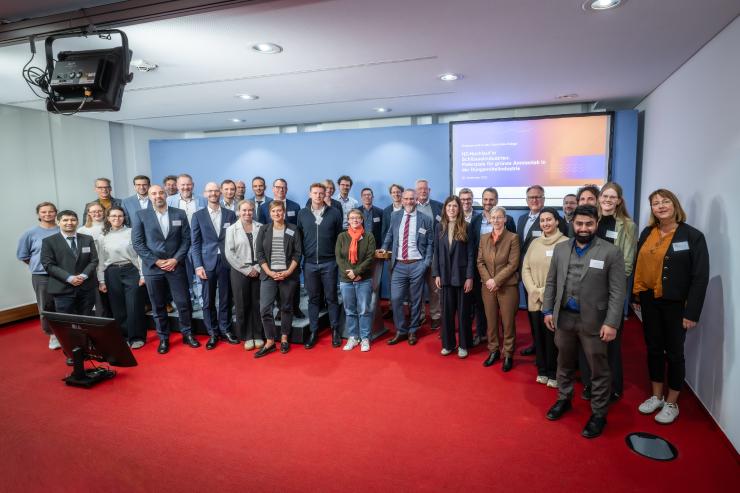
On behalf of the Federal Ministry for Economic Affairs and Energy, dena conducted the stakeholder dialogue "H2 ramp-up in key industries: Potential for green ammonia in the fertiliser industry".
With the aim of paving the way for renewable or lower-carbon fertilisers, dena organised several online workshops in spring/summer 2025 on the following topics:
Representatives from ammonia and fertiliser manufacturers, plant engineers, agriculture, food companies, associations, research institutes, and governmental and non-governmental organisations developed position papers on the above topics during the online workshops.
Leveraging his experience from previous collaborations with industry and high-level decision-makers, Dr Lénárd-István Csepei from the CoalCO2-X project played an active role in the workshops. In the first workshop, he provided an overview of the dynamics of the global ammonia market and analysed the production capacities and prices for renewable/low-carbon ammonia. Using a what-if analysis of the energy transition in German ammonia production, he emphasised the importance of renewable upstream infrastructure for resilience. He provided techno-economic insights into another dimension of CO2 emission reduction: the modernisation of existing plants by increasing energy efficiency and/or using renewable hydrogen as a raw material. In the second topic, he examined the factors that can increase willingness to pay for more expensive renewable fertilisers and the resulting agricultural products. In the last topic, he estimated the greenhouse gas intensity of the ammonia synthesis industry.
The contents were presented in September 2025 during a stakeholder dialogue in Berlin in the presence of the Federal Ministry for Economic Affairs and Energy and dena. Dr Csepei participated in this meeting. In the interactive part of the workshop, he emphasised the need for international development partnerships.
For more information on CoalCO2-X, visit the project page.