Image
Committed to reducing the CO2 footprint of all industrial sectors, the Republic of South Africa is fostering four major flagship projects that aim to transfer renewable hydrogen technologies to the mobility, agrochemicals and energy sectors. The CLIENT II project enables the German consortium to cooperate with South African stakeholders in one of these four flagship projects, which addresses the reduction of the CO2 footprint from particularly hard-to-abate sectors.
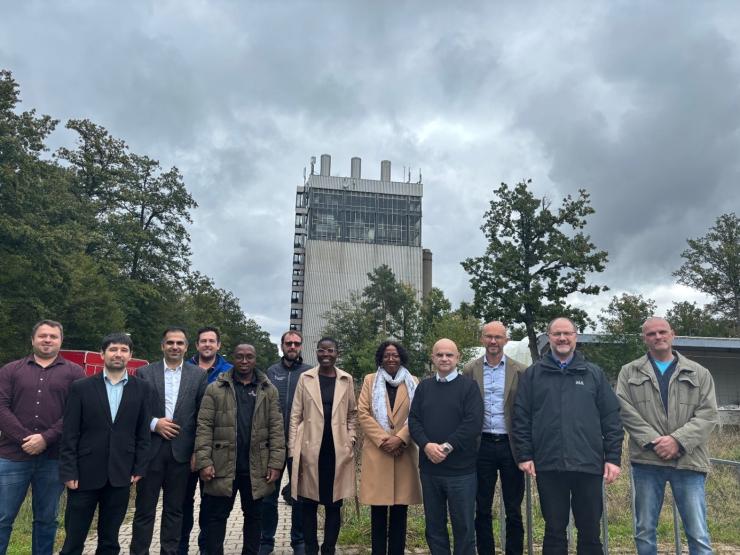
The project consortium, consisting of Fraunhofer IGB, HiTec Zang GmbH and Juchheim GmbH, is working on a pilot Haber-Bosch synthesis system with a capacity of 1 kg/h. This system is also engineered to enable the separation and further conversion of ammonia into marketable fertilizer salts. Details about the design, especially how it interfaces with local infrastructure in South Africa, were discussed at a quarterly meeting held in Stuttgart in October 2024.
In 2025, the German consortium finished the designs, and the project entered into the purchasing and construction phase. Once the construction and test runs are complete, the containerized reactor system will be transferred to the premises of the South African project partner HySA. There it will be integrated into the local infrastructure, which provides electrolytic hydrogen and nitrogen sourced from air. Fraunhofer IGB will optimize the process for intermittent operation through an extensive measurement series. Finally, IGB will also carry out a techno-economic analysis and develop a business case to support Omnia Holdings decision-making regarding the upscaling of renewable ammonia synthesis within the local boundary conditions.
For further information on the project, please visit the project site.