Image
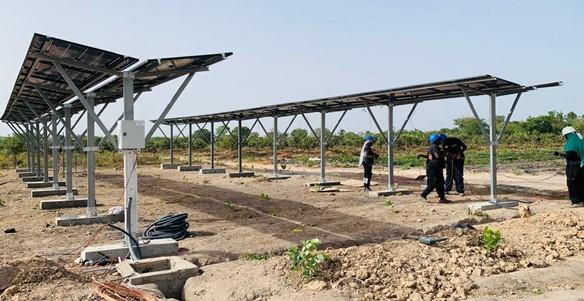
The installed systems enable irrigated farms, rainwater harvesting, post-harvest agricultural processing and cold storage. By combining renewable energy with water-saving irrigation, the systems aim to increase productivity, reduce post-harvest losses and strengthen the climate resilience of rural communities.
On the one hand, the project focuses on the technical optimization and triple use potential of APV systems. One example of this is equipping the systems with intelligent sensors and Internet of Things (IoT) devices to monitor water consumption in real time and optimize irrigation. On the other hand, the focus is on the joint development of business models around the systems in order to integrate them sustainably into the communities and create models for scaling in other communities.
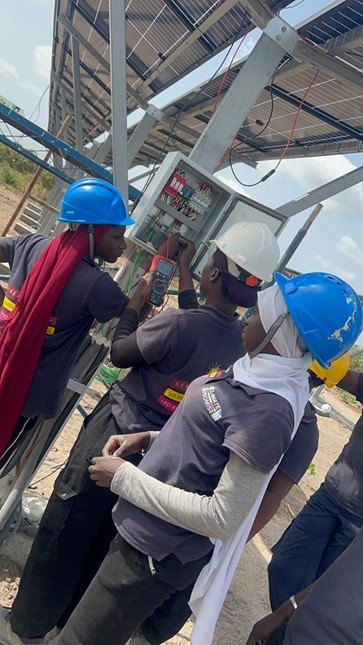
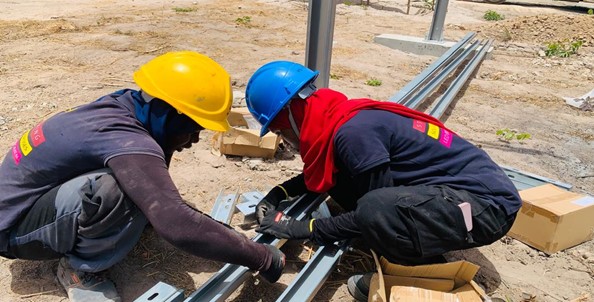
The pilot system at Afri-Farms not only provides clean energy and irrigation, but also opens up opportunities for young girls in The Gambia in the field of renewable energies. As part of the systems installation and knowledge transfer, young female electricians in training have been employed by the Mbolo Association, one of the project partners, to gain their first practical experience in setting up the system infrastructure under supervision. This includes the assembly of support frames and the wiring of the control room in preparation for the final installation of the solar panels.
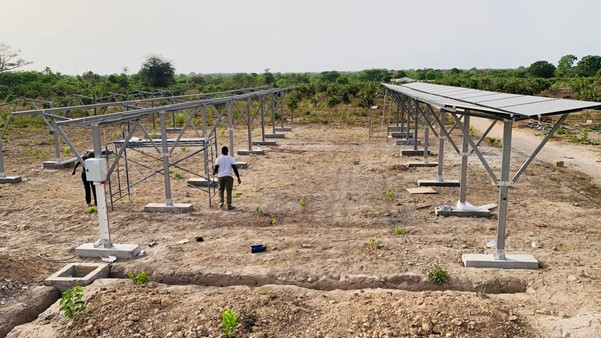
Afri-Farms LLP not only provides the land for the installation, but is also actively involved in the economic analysis and technical optimisation of the APV systems. The focus here is on the development of a scalable and sustainable business model. At Afri-Farms, the APV system is used for the post-harvest processing of mangoes, sweet potatoes, mandarins and other products in order to reduce food losses and increase income through value-added products. These income-generating activities, together with yield increases through optimized irrigation and the cooling effect of panel shading, will contribute to a comprehensive assessment of the potential of APV for replication in other communities. Ultimately, the aim is to demonstrate that such systems pay for themselves over time while providing social, environmental and economic benefits.
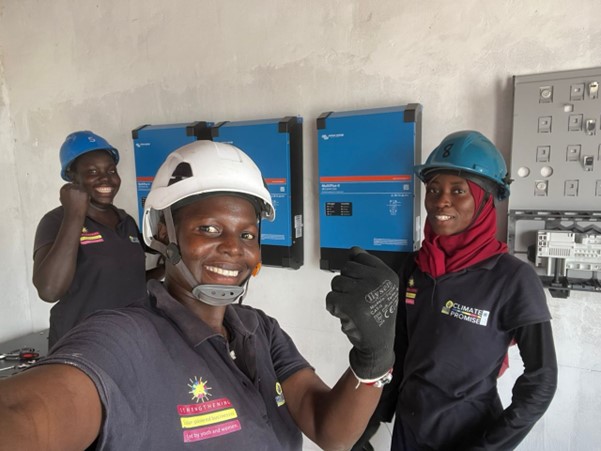
Furthermore, the project includes a training programme on the maintenance and operation of all system components as well as system design and business model development to promote the expansion of APV systems to other communities. This dual impact – providing vocational training while increasing agricultural productivity – underscores the project’s commitment to inclusive and locally-driven development.
For more information on the project, please visit the project page.